


Healthy Body > How to Make Raw Foods Part of the Way You Eat {Recipe + Giveaway}
How to Make Raw Foods Part of the Way You Eat {Recipe + Giveaway}
Most of the time when we think about a raw food diet, or hear about someone going “mostly raw”, we imagine complex recipes that involve soaking, sprouting and dehydrating. Pretty extreme and time consuming.
Enter Gena Hamshaw of the popular plant-based food blog, Choosing Raw, a certified nutritionist with a captivating writing style that leaves you feeling motivated and inspired to run straight into the kitchen to whip up her ridiculously healthy and flavorful dishes.
I instantly became a fan and avid reader of Choosing Raw because of Gena’s non-dogmatic and welcoming approach. Gena encourages people to make raw vegan food a part of the way you eat, moving at a pace that feels realistic, sustainable AND enjoyable.
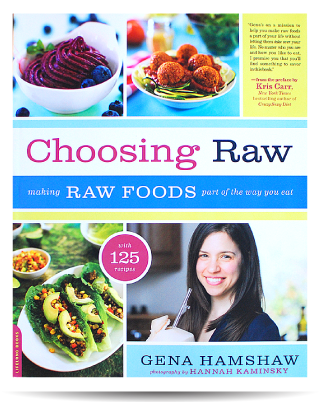
After getting to know Gena personally and continually soaking in her words of wisdom along with enjoying her innovative recipes, I couldn't wait to get my hands on her newly released cookbook, also called, Choosing Raw. With 125 vegan dishes (many gluten-free), Gena shows you exactly how to integrate more plant-based foods into your diet with the option of following a flexible 21-day meal plan.
To give you a taste of Choosing Raw, I’ve included one of my favorite recipes (so far) below. Like all of her creations, it’s colorful, full of nutrients and tastes incredible… typical Gena style.
But first, I’m excited to share an inspiring Q & A I had with Gena about her eating philosophy and overall mission behind Choosing Raw, the blog, and also the new book.
Enjoy, and be sure to keep reading to the end of this post so you can enter to win a copy of the Choosing Raw cookbook!
I love that you advocate adding in healthy foods instead of just removing the ones that are less healthful. Can you share how that ties into the meaning and philosophy behind Choosing Raw, in both your blog and now in the book?
Sure—I think the “add first, subtract later” mentality jives quite nicely with my overall approach. When people read the title of my blog, Choosing Raw, they often think that I mean “choosing a 100% raw lifestyle.” I don’t at all. What I mean to suggest is that you can make conscious, individualized choices about how to add raw foods to your life. It is and should be a choice, rather than something you feel pressured to do for the sake of achieving “perfect” health (as if there is such a thing).
Dietary transition is difficult, for all of us. I believe that it’s crucial to move slowly, focus on what you’re gaining (new ingredients, new recipes, a new sense of personal vitality), rather than what you’re eliminating, and also to recognize that you have free will throughout. No one’s forcing you to make changes, and you can move at a pace that works for you.
Why do you think that Choosing Raw would be useful to someone who is not raw or vegan?
While I did hope to inspire folks who might be skeptical about veganism to consider the lifestyle (both ethically and from a nutrition standpoint), I really hope that this book will speak to everyone, regardless of what or how they eat. I don’t like to think about “vegan food” as if it’s some exotic category; I believe that vegan food is good food, period, that simply doesn’t happen to involve animal products. If you pick my book up and feel inspired to experiment with a vegan or vegetarian diet, that’s fabulous. But if you simply want to get familiar with vegetarian cooking, to try meatless Mondays, or to add more plants into your diet, then that’s also great. My ultimate goal is to inspire folks to enjoy healthful, creative, plant-based fare—some of the time, all of the time, or once in a while!
So many people think that they don't have time to eat healthy or prepare healthy foods. Since you’re a busy woman with a hectic schedule, can you offer some advice on how you manage to eat healthy in spite of all the demands in your life?
Sure! This topic—making healthy food doable on a tight schedule—is near and dear to me. In the last three years I was juggling my blog with a full time career as a pre-med student, a hospital volunteer, and I was writing my book. It was tough. My tips:
- Don’t be afraid to embrace convenience foods. We all love the “eat real food” philosophy, but the truth is that foods like snack bars, frozen vegan grain+bean burgers, pre-cooked legumes, and other easily accessible grocery store foods exist for a reason. They help us stay healthy when we simply don’t have the time to DIY. Expecting to make everything from scratch when you’re struggling with a hectic schedule is a recipe for failure—or at least, for getting seriously overwhelmed.
- Make easy recipes. I love a gourmet entrée as much as the next gal, but the foods I eat most often are simple. They feature short ingredient lists and easy instructions. I’d rather eat simple, fresh foods that can actually fit into my busy life than constantly attempt to make complicated meals that are simply beyond the scope of what’s possible for me.
- A little planning goes along way. We all live in the real world, and it may not be possible for you to map out an entire week of meal plans or recipes each and every weekend. But try to map out two or three recipes that you intend to make over the course of the week, as well as a few staples (salad dressings, hummus, cooked grains and legumes). Purchase groceries according to what you’ve planned, and then use leftovers for lunches.
Your book is filled with 125 mouthwatering recipes. How do you recommend getting started so that making raw foods a part of the way we eat can feel natural easy, and sustainable?
I think one of the biggest misconceptions about eating raw food is that you have to “go raw”—either immediately or eventually. Not true. Cooked food isn’t superior to raw, and one doesn’t have to plan on transitioning to a raw diet as a means of living healthfully. My whole point with the book was to suggest that raw foods have a lot of healthful properties—they’re hydrating, they’re often higher in micronutrients, and they’re wholesome—and that you can boost your diet simply by eating more of them, whether that means a smoothie once a day or a salad at lunch.
So: I would say that folks should get started with a single recipe. Maybe one becomes two, and two becomes three. Maybe this turns into a weekly plant-based ritual. See where the journey takes you, and have fun.
Speaking of starting with just one dish, why not try out this scrumptious & innovative zucchini pasta recipe from the cookbook. I can tell you firsthand that it's easy to prepare and deeeelicious!
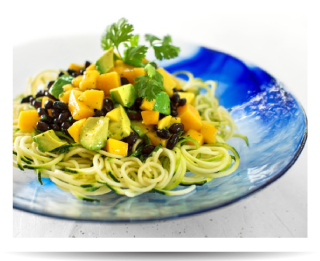
Zucchini Pasta with Mango, Avocado, and Black Bean Salsa
Makes 4 Servings
2 ripe Haas avocados, halved, pitted, and cut into 3⁄4-inch cubes
3 tablespoons freshly squeezed lime juice
2 ripe Ataulfo mangoes, peeled, pitted, and cut into 1⁄2-inch cubes
¼ cup chopped fresh cilantro, plus more as garnish
½ teaspoon sea salt
Freshly ground black pepper
1 teaspoon agave nectar or pure maple syrup
2 tablespoons extra-virgin olive oil
1 ½ cups cooked black beans, or 1 [14-ounce] can
4 medium zucchini, spiralized
1. Toss all the ingredients except for the zucchini in a mixing bowl. Combine well.
2. Divide the zucchini onto four plates. Top each with a quarter of the mango mixture. Sprinkle with extra cilantro, and serve.
To store, keep the zucchini pasta and the mango mixture separate. Both will keep, stored in an airtight container in the fridge, for 2 days.
From Choosing Raw by Gena Hamshaw. Reprinted with permission from Da Capo Lifelong, © 2014.
Now it’s your turn: Share one way you’re going to make raw foods a part of the way you eat. We’re picking one lucky person to win a copy of Choosing Raw!
*UPDATE: Thanks to everyone who submitted comments for the giveaway. We randomly selected Mamaste to receive a copy of Choosing Raw.

